Things to Do in Wicker Park: The Local Guide
Six corners, the 606, Beer Baron mansions and a doctrine about ketchup: the neighborhood that outgrew its own myth, walked block by block.
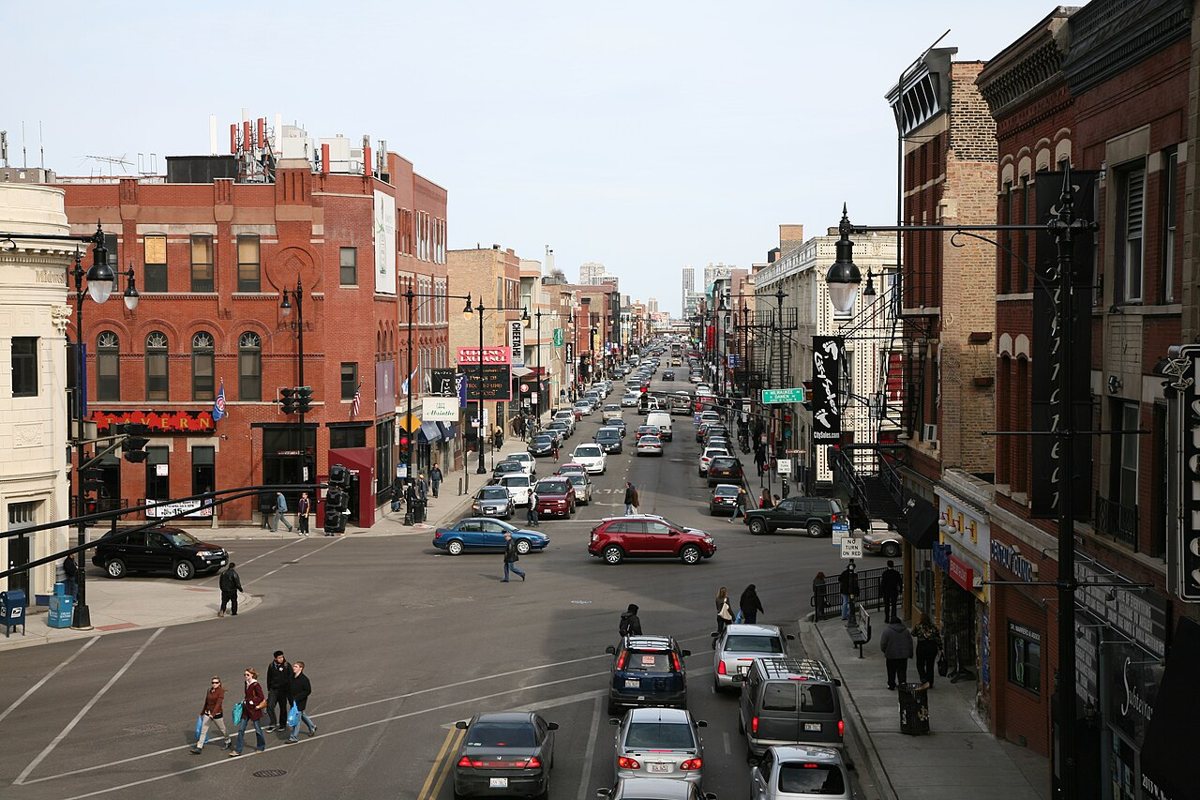

Six o'clock on a weekday, and the intersection of Milwaukee, North and Damen still hasn't decided what it wants to be. A Blue Line train clatters into the Damen stop overhead as a cyclist coming off the 606 leans hard into the turn onto Milwaukee, cutting around a delivery truck idling outside a corner bar that's been pouring Malört since long before anyone reading this moved in. That collision of angles is the actual center of gravity for the neighborhood, and it's the honest way to start any list of things to do in Wicker Park: not with a postcard shot, but with the six-way intersection where the traffic, the trains and the history all cross at once.
Wicker Park earned its name from an actual park, not a marketing department, and that matters for how the neighborhood still works. It was Polish and Scandinavian working-class blocks for most of a century, then a cheap landing spot for artists and bands in the 1980s and '90s, and now it's one of the city's busiest restaurant and nightlife destinations, with rents to match. Locals will tell you the gentrification story is not subtle here. Six-flats got condo-converted, storefronts turned over, and the old Polish and artist-enclave character got pushed toward Logan Square and further northwest. None of that erases what's still standing. The bones of the neighborhood, the mansions, the storefronts, the fieldhouse, the L stop, are the same ones that were here when this was a rougher, cheaper, more contested piece of the city. Here's how to actually spend a day, or three, in it.
Six Corners and the Park That Gave the Neighborhood Its Name
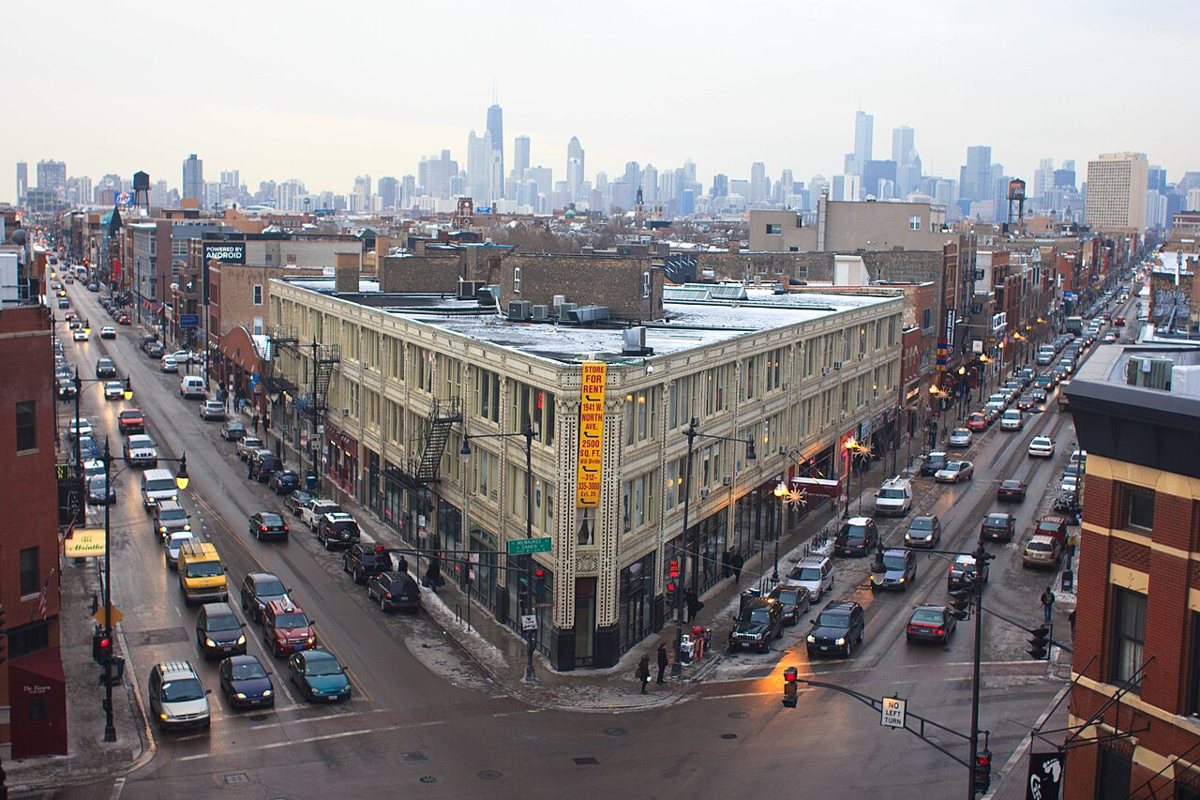
The six-corners intersection of Milwaukee Avenue, North Avenue and Damen Avenue is not just a crossroads, it's the connective tissue of the entire area. Three major streets meet at odd angles, which is exactly the kind of collision that produces Chicago's flatiron-shaped buildings and makes walking here feel different from the city's more predictable grid. Traffic lights cycle in a way that takes a minute to learn, pedestrians jaywalk with total confidence, and every direction you look holds a different decade of the neighborhood's history: a converted factory, a new glass-fronted retail build, a century-old brick storefront. Stand here in the early evening when the bars are filling up and the trains are running and you'll understand why this spot, more than any single restaurant or shop, is what people mean when they say Wicker Park. Insider tip: the northeast corner gives the clearest sightline to the Flat Iron Building and the Robey at once, which makes it the best single vantage point in the neighborhood for getting your bearings before you start walking.

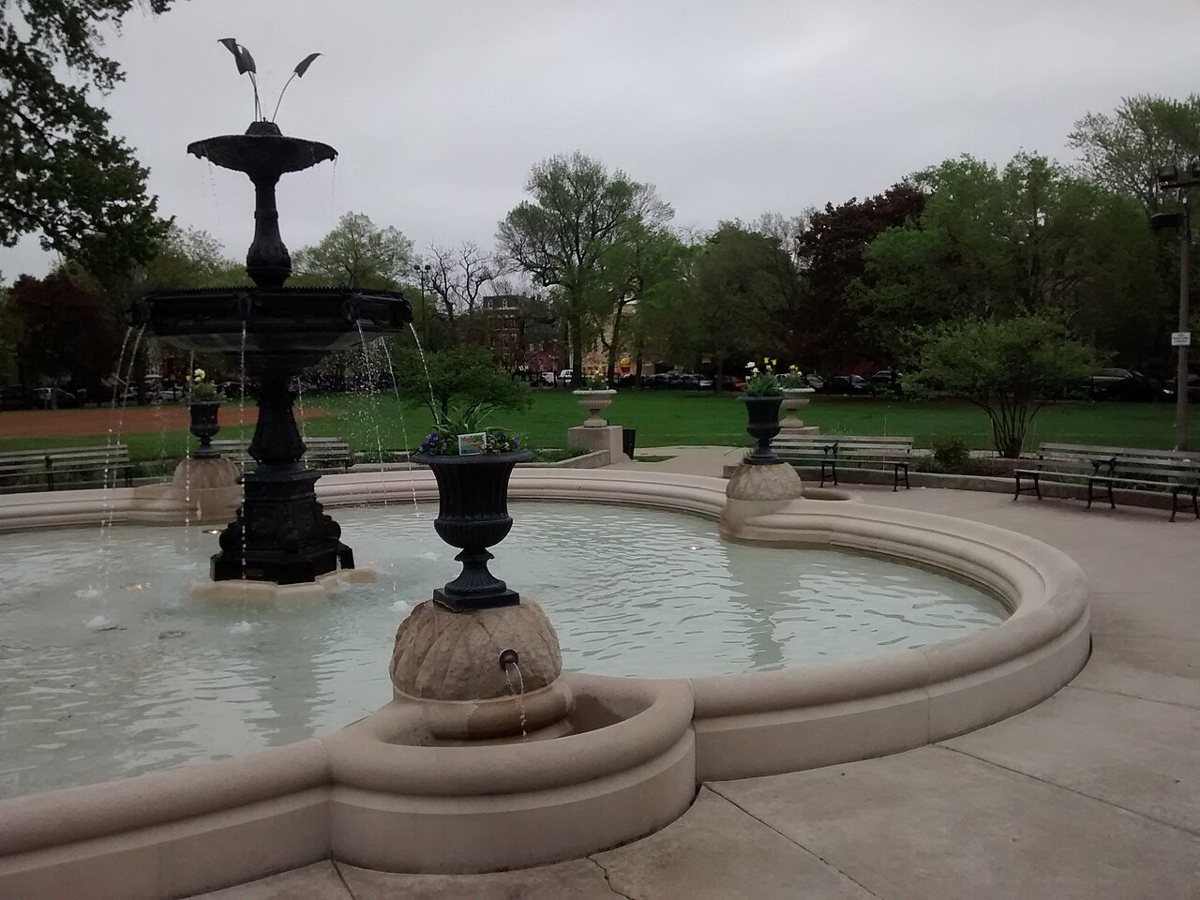
A few blocks from the intersection sits Wicker Park itself, the actual park, a compact green space with a fountain, mature trees and a fieldhouse that anchors the neighborhood's daily life more than any bar or boutique does. This is where dog owners cluster in the morning, where kids climb on the playground equipment after school, and where office workers eat lunch on the benches ringing the fountain in warmer months. The fieldhouse runs community programming and has for generations, and the park's small footprint belies how much neighborhood identity gets built here: block parties and informal pickup games and the occasional wedding photo shoot against the fountain. Walk the perimeter and you'll see the historic homes that ring it, a reminder that this was a residential square long before it was a brand name. Visit on a weekday morning if you want it quiet, or a summer weekend if you want to feel the neighborhood's actual pulse.

Architecture and History Worth Walking For
The Flat Iron Arts Building sits right near six corners and has functioned as working artist studio space for decades, one of the last holdouts from the era when this neighborhood was genuinely cheap for painters and sculptors and other working artists. The building's triangular footprint follows the same street-angle logic that shapes so much of the area, and its ground floor has cycled through galleries and small shops while the upper floors stay dedicated to working studios. It's not a museum, so don't expect posted hours or a gift shop. What you get instead is a real, occupied piece of the neighborhood's artistic backbone, still doing the job it was built for. Look up at the windows as you pass and you'll often catch a glimpse of actual working studios, easels and canvases visible from the street. That's the tip: this is a building best appreciated from the sidewalk, at an unhurried pace, rather than something you tour.
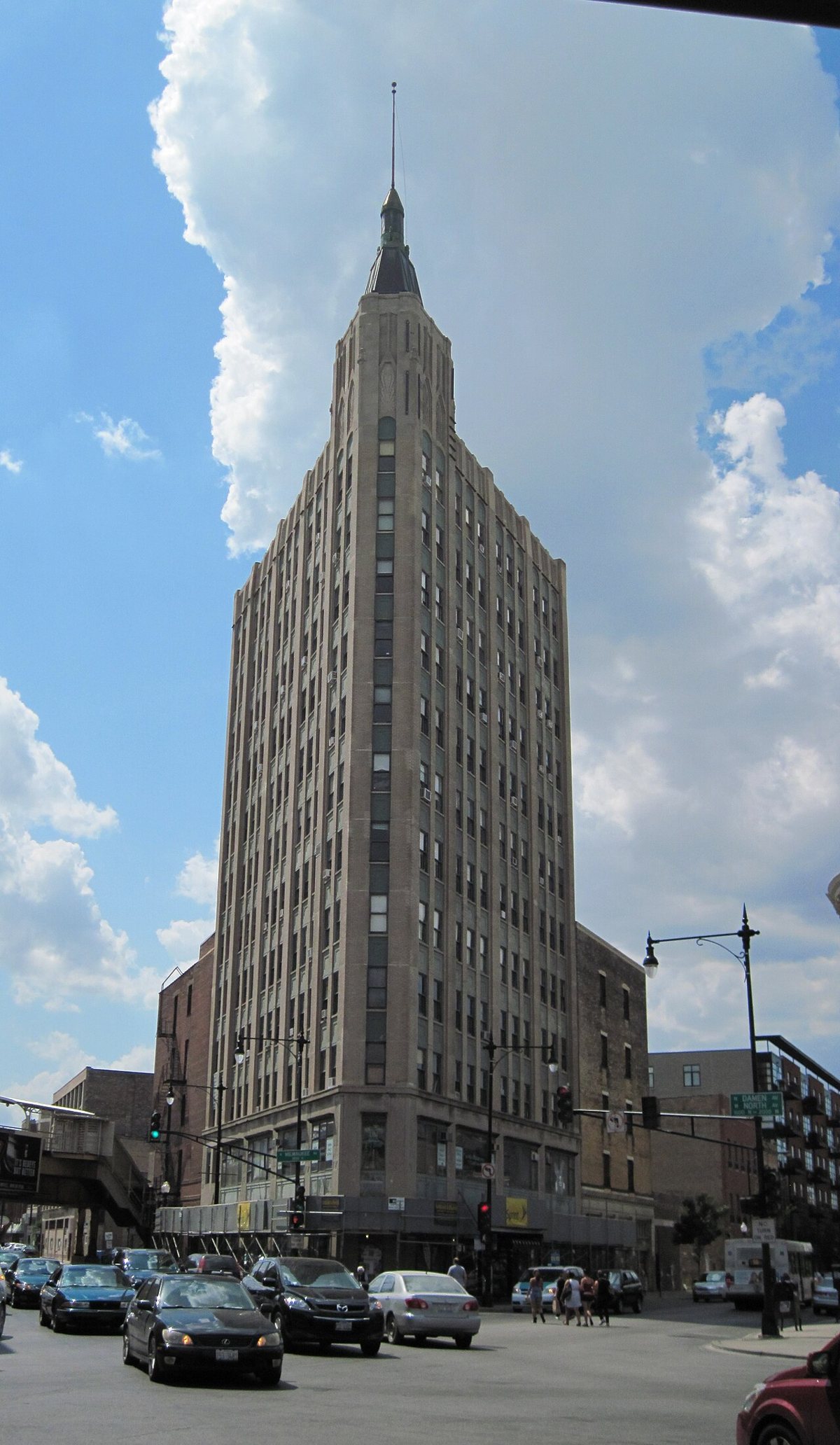
The Robey Hotel occupies the old Northwest Tower, a flatiron-shaped high-rise that has been a fixture of the six-corners skyline since it went up in the early twentieth century. Its wedge shape is a direct product of the same three-street intersection that shaped the Flat Iron building, and for decades it was simply the tallest, most recognizable structure in the neighborhood before it was reborn as a boutique hotel with a rooftop bar. You don't need to book a room to appreciate it. The lobby is open to walk through, and the rooftop, weather and access permitting, gives one of the better raised views of the neighborhood's rooftops and the skyline beyond. Insider tip: come at golden hour if you want the building's copper-toned facade and the surrounding low-rise blocks lit at their best, and expect a wait if you're hoping to get up top on a warm Friday night.

A few blocks off the main commercial strips, the historic mansions on Hoyne and Pierce Avenues make up the heart of the Wicker Park Historic District, sometimes called the Beer Baron mansions for the nineteenth-century brewing families who built them. These are genuinely grand homes, turreted, gabled, built of stone and brick in a way that has nothing in common with the storefronts a few blocks away, and walking these two streets is the single best way to understand what kind of money and ambition originally built this neighborhood before it was ever bohemian or trendy. The district is residential, so treat it accordingly: walk the sidewalk, admire the architecture, and don't linger on private lawns or porches. Go slow on a quiet morning and you can read the history in the details, the carriage houses tucked behind some of the larger lots, the variety of rooflines from one house to the next.
Nearby, at the intersection where Division, Ashland and Milwaukee converge, sits the Nelson Algren fountain, a nod to the writer whose work is inseparable from this stretch of the city and whose name is permanently tied to what old-timers still call the Polish Triangle. This triangle of pavement was once the literal civic heart of Polish Chicago, ringed by churches, halls and the kind of dense immigrant commercial strip that gave Division Street its old nickname of Polish Broadway. Algren wrote about this exact corner of the city, its bars and hustlers and working people, and the fountain is a small, understated way the neighborhood keeps that history visible instead of paving over it entirely. Stop here on your way between six corners and the Blue Line, and take a minute to notice how much civic architecture, the old bank buildings, the ornate storefronts, is still standing from that era.
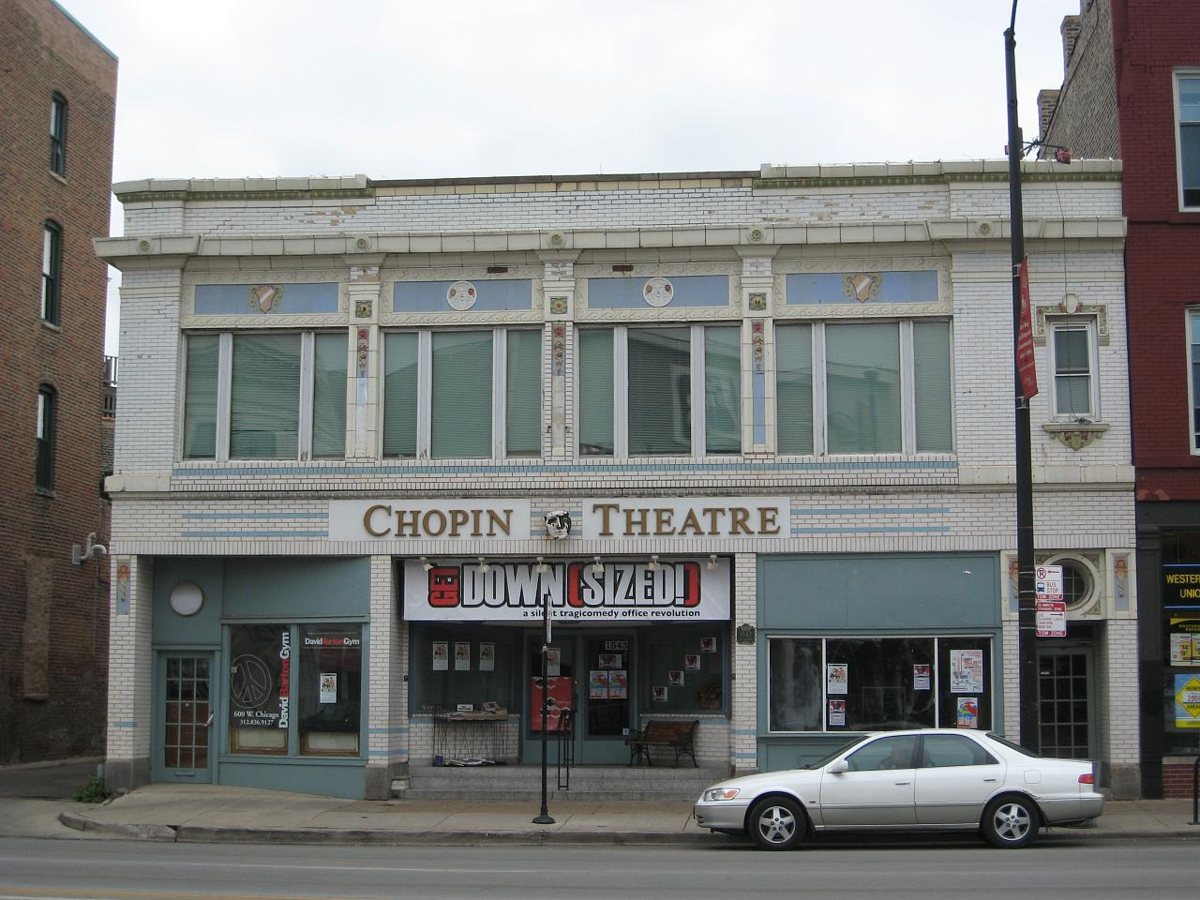

Division Street itself carries that Polish Broadway history for blocks, running through what was once among the most concentrated Polish immigrant commercial corridors in the country. Much of that specific character has thinned out as the neighborhood's demographics and economics shifted, but the street grid, the church spires visible from blocks away, and scattered older storefronts still tell that story if you know to look for it. Today Division functions as a connector between six corners and the Polish Triangle, lined with a mix of newer bars and restaurants alongside the occasional holdover business. Walk it end to end once, slowly, rather than just crossing it on your way somewhere else. It's the clearest single-street timeline of how this neighborhood actually changed, generation by generation, rather than the compressed version you get from a single Instagram block.
Things to Do in Wicker Park for Shopping and Wandering
Milwaukee Avenue is the neighborhood's indie retail spine, and it has been for decades, running on a diagonal that ignores the city's grid entirely. Expect a dense run of vintage and resale clothing shops, independent boutiques carrying local and small-batch designers, record stores that have survived multiple format collapses, and a steady rotation of cafes that function as informal offices for half the neighborhood's freelancers. This is not a mall corridor with predictable chain stores, or at least not primarily. It rewards actually going into places rather than window shopping, since the best finds tend to be inside, in the racks and bins rather than the front window display. Plan on spending an afternoon here rather than an hour, and duck into whatever storefront catches your eye rather than following a checklist. If you need a break partway through, a good local coffee shop along this stretch is never more than a block or two away.
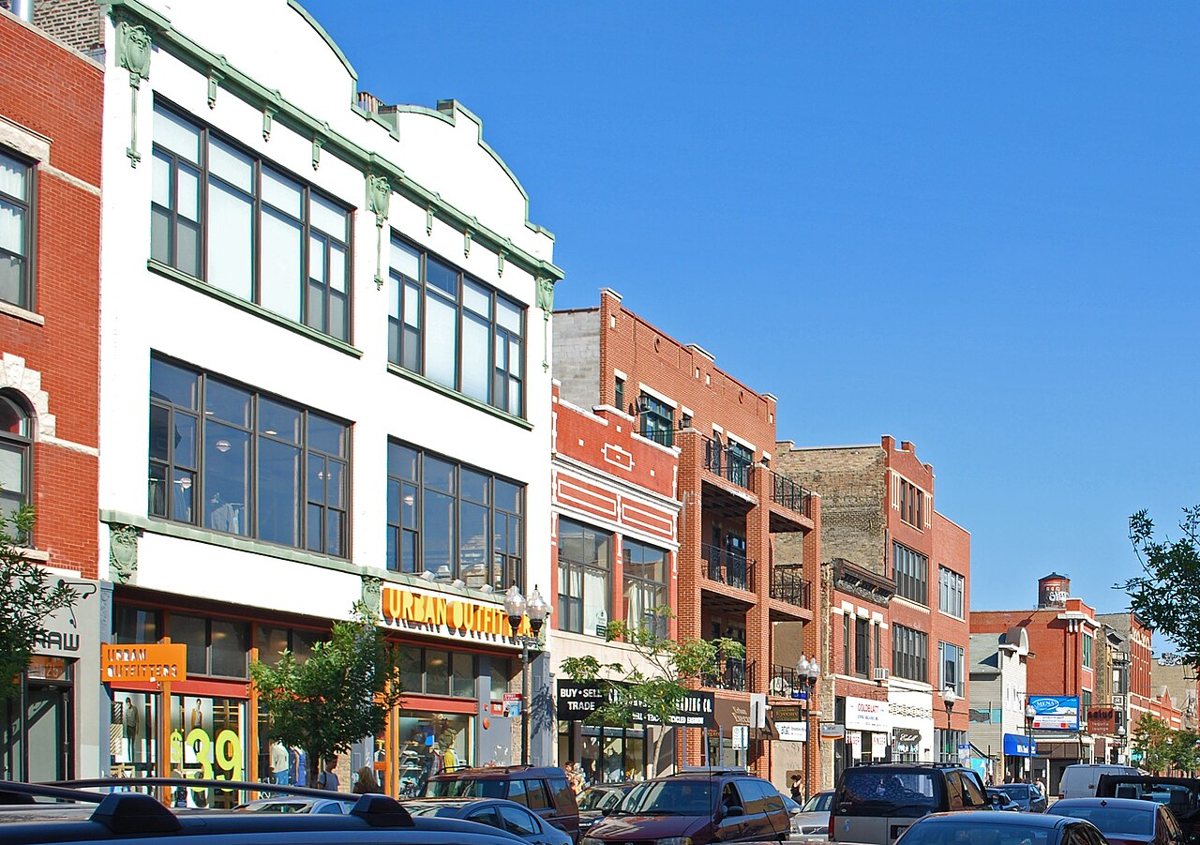

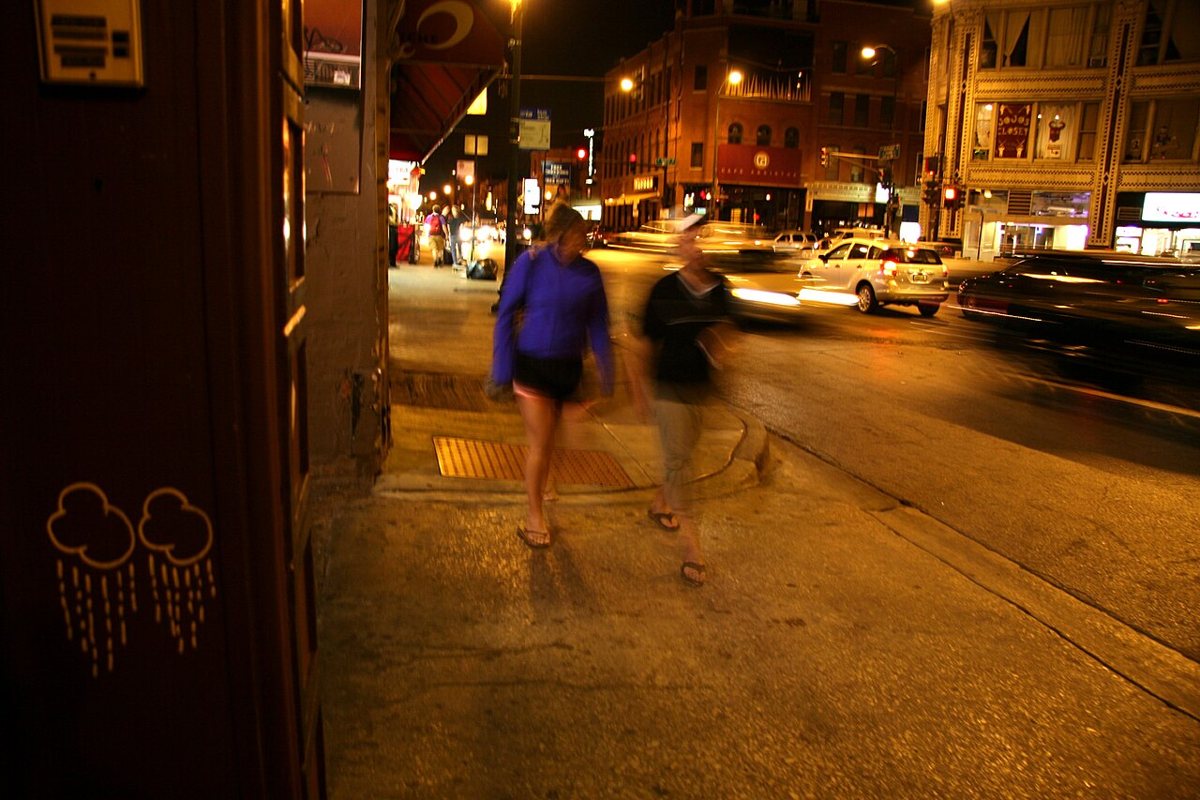
Damen Avenue runs the other major commercial line through the neighborhood, intersecting Milwaukee at six corners and continuing north toward Bucktown with its own mix of restaurants, boutiques and bars. Where Milwaukee leans into vintage and music history, Damen tends to skew toward dining and cocktail bars, with a denser concentration of sit-down restaurants and a nightlife scene that fills up fast on weekend evenings. It's also home to the CTA Blue Line stop that shares its name, which makes it the natural spine for anyone getting around the neighborhood without a car. Walk Damen north from six corners into Bucktown proper and you'll notice the transition happen gradually rather than at some marked boundary, one more reminder that neighborhood lines in Chicago are more cultural than official.

The 606 and Getting Outside
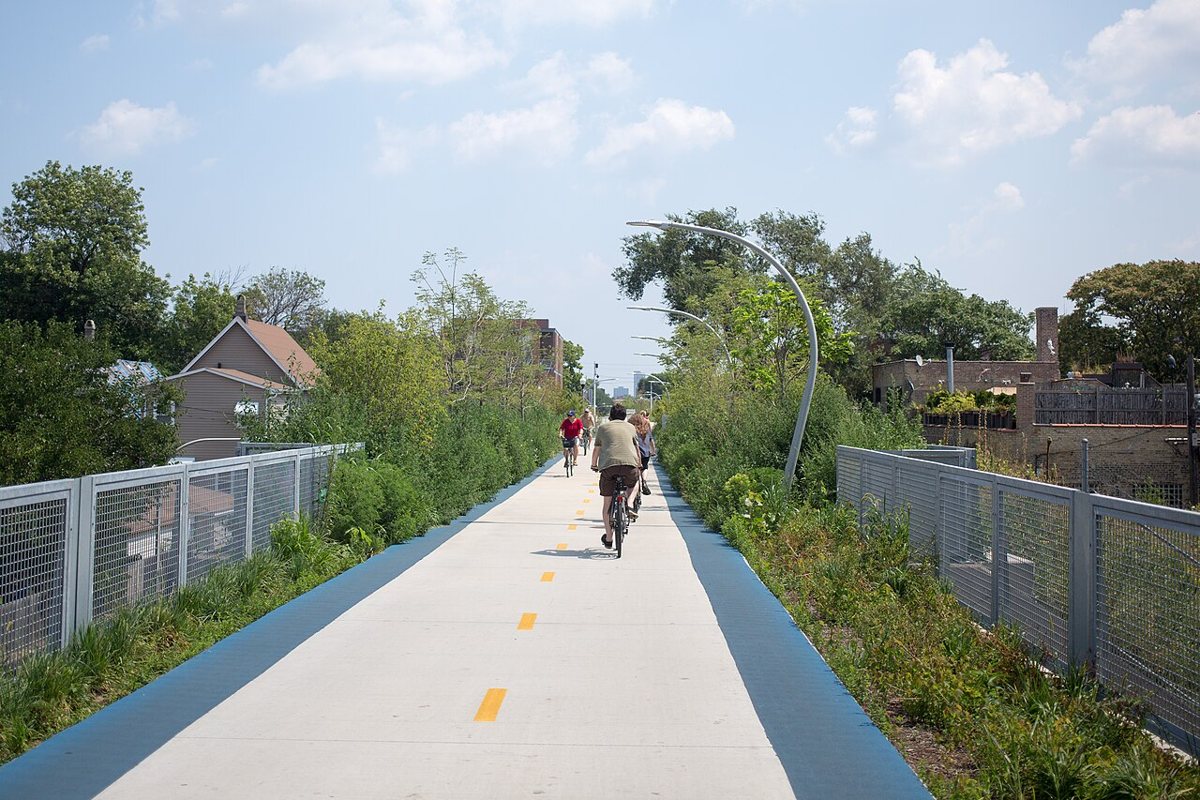
The 606, built on a former raised freight rail line and officially called the Bloomingdale Trail, is the single best piece of infrastructure this neighborhood has gained in a generation. It runs roughly three miles east to west, raised above street level for most of its length, which means you get a genuinely different vantage on the neighborhood than you do at ground level, backyards, garage roofs, church steeples, all visible from a walking and biking path that feels miles removed from the traffic below. Access points drop down into Wicker Park at several spots, and locals use it constantly for running, biking and simply getting from one part of the neighborhood to another without dealing with cross streets. It's flat, paved, well-used at nearly all hours, and free, which makes it maybe the easiest entry on this entire list. Time it for sunset if you want the best light on the skyline views that open up periodically along the route, and bring a bike if you have one, since the trail rewards covering real distance rather than a short stroll.

Music, Art and Festival Season
Wicker Park Fest has run every summer for decades and remains the clearest annual proof of the neighborhood's arts-enclave roots, even as the surrounding real estate has gone thoroughly upscale. Local bands and DJs and a real cross-section of the neighborhood turn out for it, and it functions as much as a reunion for former residents priced out to Logan Square and Humboldt Park as it does a draw for newcomers. The related Around the Coyote arts tradition, born out of the same wave of artists who colonized the neighborhood's cheap studio space in the 1980s and '90s, is part of the same lineage, open studios, gallery walks, and a general insistence that this neighborhood's identity was built by working artists before it was built by developers. You don't need to time a trip around a specific festival weekend to feel this history. It's baked into the storefronts, the Flat Iron Building's still-occupied studios, and the general density of live music venues and small galleries that outlasted the rent increases.
Eating and Drinking Like You Live Here
Get the food doctrine straight before you sit down anywhere. A proper Chicago dog comes on a poppy seed bun with yellow mustard, chopped onion, bright green relish, a dill pickle spear, tomato slices, sport peppers and a dash of celery salt, and it never, under any circumstances, gets ketchup. Ask for ketchup on a hot dog in this city and you will be corrected, gently or otherwise. Italian beef, dipped or not, wet with jus and topped with sweet peppers or hot giardiniera depending on your constitution, is the other essential order, and Wicker Park and Bucktown have plenty of counter-service spots serving both without any pretense. On pizza, skip the tourist-brochure idea that Chicago means an hour-long deep dish wait. The thing actual Chicagoans eat on a Tuesday night is tavern-style, thin and cut into squares instead of wedges, and you'll find it at neighborhood taverns all over this area. For a drink, the neighborhood's dive bars and shot-and-a-beer joints are as much a part of its identity as any boutique, low light and cheap drinks and regulars who've been coming for twenty years. And if someone hands you a shot of Malört, know what you're in for: it's a bitter, wormwood-based Chicago liqueur that tastes faintly of a mistake, and ordering a round for out-of-town guests is a minor local tradition bordering on a prank. For a fuller rundown of where to actually sit down, a proper restaurant guide to the neighborhood covers the specifics better than any single paragraph can.
Getting Around Wicker Park
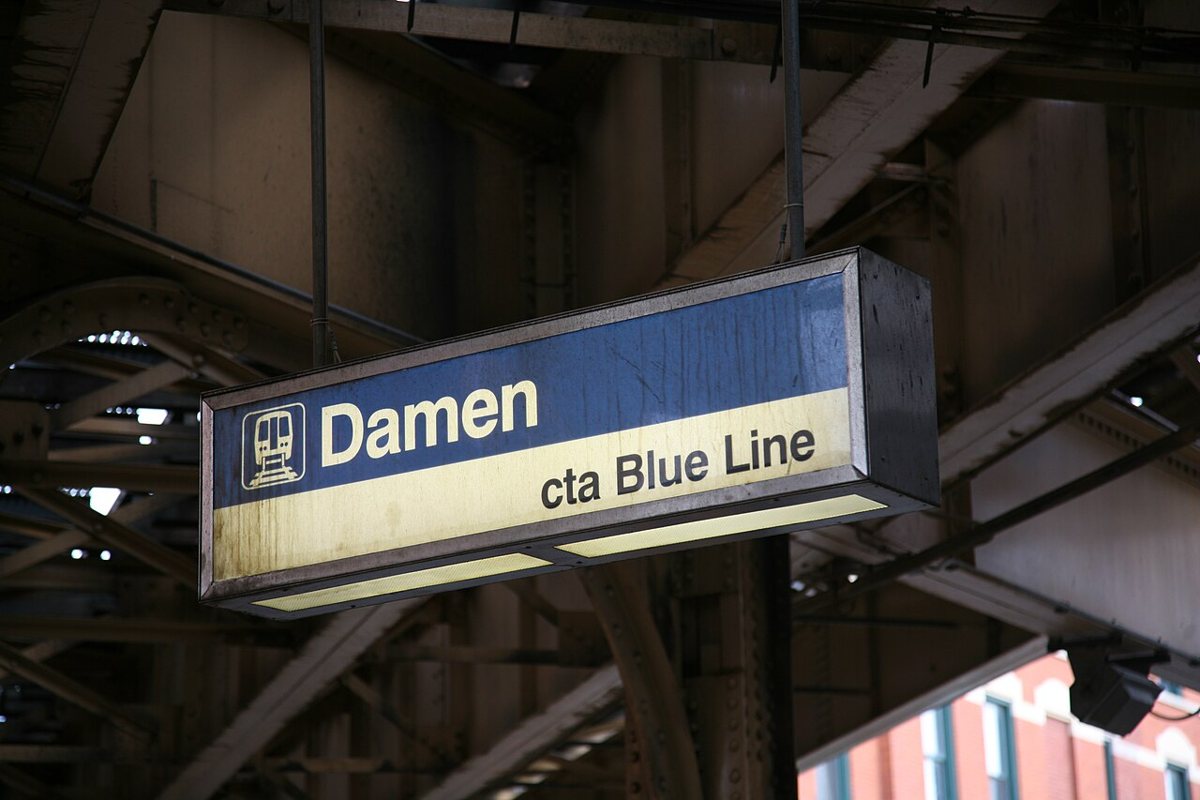
The CTA Blue Line's Damen stop is the most useful transit anchor in the neighborhood, dropping you a few minutes' walk from six corners and putting the Loop within a straightforward ride in one direction and O'Hare in the other. The station itself, with its distinctive canopy and street-level entrances, has been a fixture of the neighborhood for generations and remains the fastest way in or out if you're not driving. Parking around six corners and along Milwaukee and Damen is scarce to hopeless on weekend nights, so plan on the train, a bike, or your own two feet once you arrive. The 606 doubles as a genuinely useful transportation corridor as well as a recreational one, letting you cut between the western and eastern ends of the neighborhood without touching a car at all.

What Costs Nothing
- Walking six corners itself, and watching the intersection work, costs nothing and tells you more about the neighborhood than any single shop.
- The 606 is free to walk or bike, at any hour, in either direction.
- Wicker Park's fountain, fieldhouse grounds and playground are open to the public with no admission.
- Walking the historic district on Hoyne and Pierce Avenues, from the public sidewalk, costs nothing beyond the time it takes.
- The Nelson Algren fountain and the Polish Triangle are open-air and unticketed, day or night.
Who Each Part Is For
- First-time visitors with only an afternoon: six corners, the park, and a walk down Milwaukee Avenue covers the essentials.
- Architecture and history readers: the Robey, the Flat Iron Building, and the Beer Baron mansions on Hoyne and Pierce reward slower, dedicated time.
- Runners, cyclists, and anyone traveling with kids or a dog: the 606 and the park itself are the easiest, most forgiving stops.
- Night owls: Damen Avenue and the blocks around six corners carry the neighborhood's bar and restaurant scene well past dinner.
Timing matters here more than in a lot of neighborhoods. Weekday mornings and early afternoons are quiet, good for the park, the mansions on Hoyne and Pierce, and unhurried browsing on Milwaukee Avenue. Evenings and weekends bring the crowds, especially around six corners and Damen, where the restaurant and bar scene runs late. If you're budget-conscious, know that the park, the 606, six corners itself, and a walk through the historic district cost nothing at all, and they're arguably the most essential parts of this guide regardless of what you spend on food or drinks. A single day is enough to hit the highlights. Two or three lets you actually slow down and feel the difference between the commercial strips and the quiet residential blocks a few minutes off them.
The Neighborhood's Honest Verdict
Wicker Park doesn't need to prove anything to anyone outside Chicago, and it certainly isn't trying to be a version of some other city's downtown. It carries its contradictions openly: a former immigrant and artist enclave that's now one of the pricier, more design-conscious corners of the city, sitting a short train ride from parts of the West Side that have gotten none of this investment and none of this foot traffic. That imbalance is worth naming plainly rather than glossing over with a list of nice restaurants. What Wicker Park does have, still, is real architecture you can walk block by block, a park that predates every boutique on Milwaukee Avenue, a rail trail that turned unused infrastructure into one of the best free things to do in the entire city, and a six-corners intersection that has been the actual pulse of the place for longer than any single business that lines it. Go for the shops and the bars if that's what brought you. Stay long enough to notice the mansions, the fountain, the trail, and the trains, because those are the parts of this neighborhood that were never for sale in the first place.