Where to Eat in Logan Square Worth the Trip
Logan Square feeds itself on two tracks at once, the taquerias and panaderias that built the neighborhood and the chef-driven kitchens that followed them onto Milwaukee Avenue.
Logan Square's boulevard runs wide enough to land a plane on, and on any given evening its median fills with grandmothers pushing strollers and a guy grilling elote out of a cart hitched to his bike, kids on fixed-gear bikes cutting between them. The square itself, the traffic circle where Milwaukee, Kedzie, and Logan Boulevard collide, has outlasted every wave of change the neighborhood has absorbed, from the Puerto Rican and Mexican families who built its commercial spine through the 1970s and 80s to the wine bars that have since moved onto the same blocks. Figuring out where to eat in Logan Square means accepting that the neighborhood runs on two tracks at once, and the best meals usually come from picking one lane and staying in it rather than splitting the difference.
Where to Eat in Logan Square Starts on Milwaukee Avenue
Milwaukee Avenue between Fullerton and the Kennedy is the closest thing Chicago has to a single street that can hold both a blowout dinner and a burrito assembled behind bulletproof glass. Reservations-only restaurants with tasting menus sit two doors down from taquerias that have been serving the same steady lunch crowd for decades. That density is what pulls people in from other neighborhoods, and it means where to eat in Logan Square depends heavily on which stretch of the avenue you're standing on and what time of night it is. Early evening favors the counter-service spots and bakeries still doing brisk business; after nine, the corridor tilts toward wine bars, cocktail dens, and restaurants running a second seating.
The Boulevards Still Feed the Neighborhood
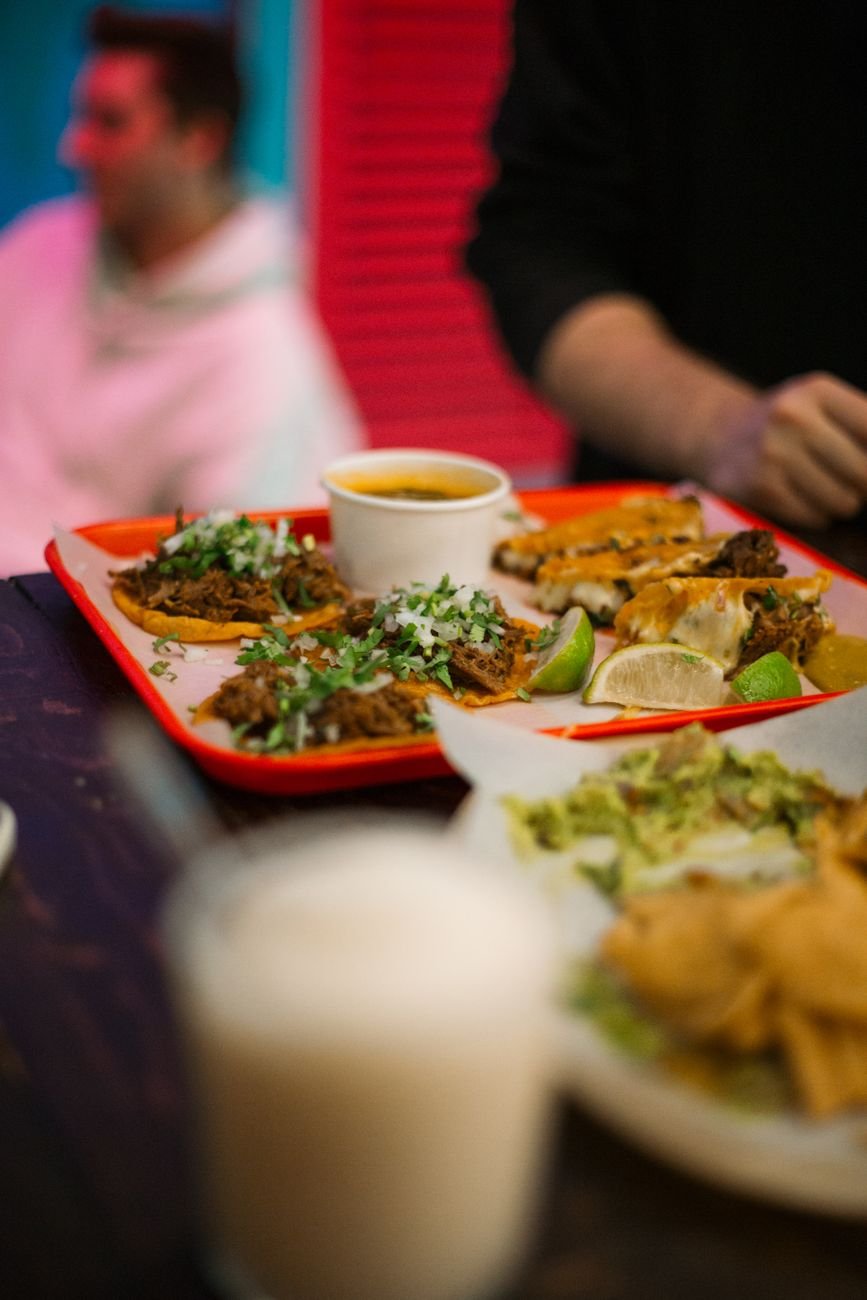
Logan, Kedzie, and Humboldt Boulevards were laid out as part of Chicago's grand boulevard system, wide green corridors meant to link the city's park network, and Logan Square's stretch remains largely intact. Walk a few blocks off the boulevard and you land in the neighborhood's older commercial pockets, where Mexican bakeries turn out pan dulce by the tray and taquerias run steam tables of stewed meats meant for tacos, tortas, and weekend bowls of consomme. This is the food that built the neighborhood's reputation before anyone was writing about it as a dining destination, and it remains the most reliable answer for a Logan Square weeknight when you want something cheap and far better than it has any right to be. A torta ahogada or a plate of tacos al pastor carved off a trompo tells you more about the neighborhood's history than any tasting menu.
Tavern-Style Pizza and the Bars That Serve It
Chicago's everyday pizza is thin-cut tavern style, sliced into squares, and Logan Square has its share of bars built around a good pie and a cold beer rather than a white tablecloth. These are the places to know if you want a Tuesday-night dinner that doesn't require a reservation: a booth, a pitcher, and a pizza cut into party squares shared across the table. Deep dish belongs to a different kind of night, a special-occasion trip usually made downtown or in the neighborhoods built around it, and treating it as an everyday Logan Square meal misses what the neighborhood actually does well.
The Destination Restaurants
What changed Logan Square's reputation beyond the neighborhood was a run of chef-driven restaurants that opened along Milwaukee and on the side streets through the 2010s, the kind of places that pull diners from Lincoln Park and the suburbs on a Friday night. Many built their names on ambitious tasting menus, wood-fired cooking, or a wine list that takes as much thought as the food. They tend to be small, they tend to book up, and they tend to reward showing up hungry and willing to let a kitchen make the decisions. This is also where the neighborhood's Latino food traditions and its newer restaurant wave overlap most interestingly, since more than a few of the chefs behind these kitchens grew up eating at the taquerias a few blocks away and cook with that memory intact.
For a sense of how another Latino-rooted neighborhood handles its own food identity, a Pilsen taqueria makes a useful comparison: different immigration history, similar instinct to keep the everyday food excellent while newer restaurants open around it. Logan Square's neighbor to the east runs a different game entirely; anyone weighing Milwaukee Avenue against the restaurant row in Wicker Park and Bucktown will notice Logan Square skews younger, cheaper, and less polished at the edges, which is exactly the point.
Picking a Spot in Logan Square
- Come hungry for masa. Tortillas made in-house, tamales, and pan dulce are where the neighborhood's oldest kitchens put their effort, and they show it.
- Treat the avenue and the side streets differently. Milwaukee Avenue draws the crowds and the wait times; a block or two off it tends to move faster.
- Save the tasting menus for a night you can commit to. They run long, and Logan Square's kitchens are not shy about a two-hour seating.
- Walk the square itself before you decide. Circling the traffic circle on foot, especially near the 606 entrance, gives you a read on which blocks are busy and which restaurants have room.
The neighborhood's food writes its own honest history if you let it. A torta counter that's been open thirty years and a wine bar that opened eighteen months ago can sit on the same block without one erasing the other, and that's Logan Square's real argument for itself. Eat both in the same week and you'll understand the neighborhood better than any single meal could explain.