Best Food Halls in Chicago You'll Actually Love
The format works when six people can't agree on lunch and nobody wants to walk far in the wind, but the best food halls in Chicago are worth a trip on their own merits.
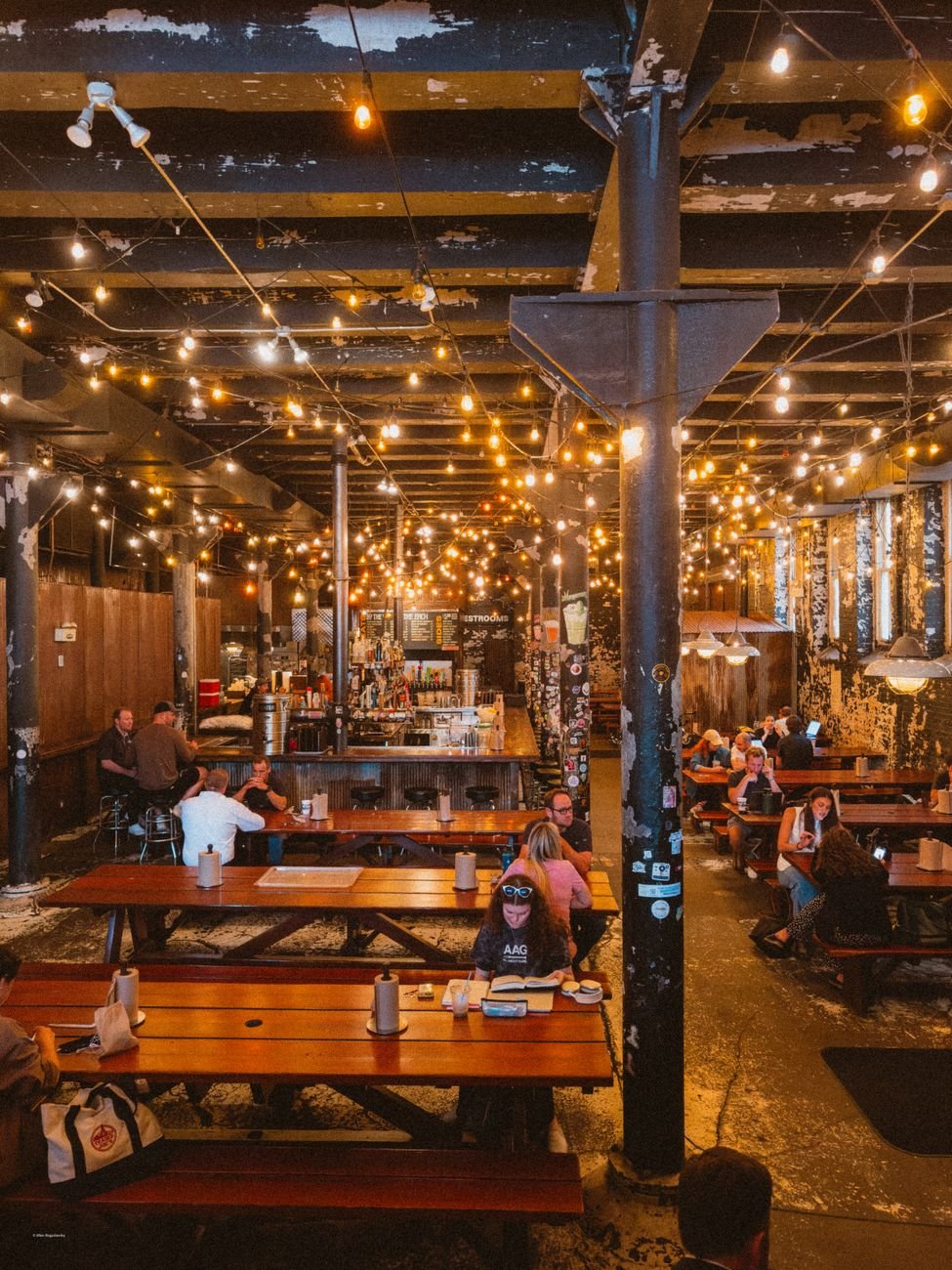
A food hall solves one very specific Chicago problem: six coworkers who want six different lunches, one of them who refuses to walk more than a block in a January wind, and nobody willing to relitigate the decision at 11:45. That's the real appeal behind the best food halls in Chicago, and it explains why the format has taken hold in the Loop and Fulton Market over the past decade instead of fading out like a lot of downtown dining trends do. These aren't food courts with fluorescent lighting and a chain sandwich counter. The better ones are assembled by people who actually eat in this city, the seating is built to linger in, and the drink program has some thought behind it instead of a single sad tap.
The distinction matters because Chicago has had mediocre versions of this idea for decades. The change is in who's running the stalls now. The current wave leans on local chefs and operators testing a concept before committing to a full lease, which means the food moves and rotates in a way an old-fashioned food court never did.
What Separates a Good Food Hall From a Mall Food Court
Three things, roughly. First, the vendors are chosen, not just rented to whoever signs a lease. A good operator is thinking about balance across a room the way a magazine editor thinks about a table of contents. Second, the seating and bar service are designed as a destination, not an afterthought bolted onto a row of counters. Third, at least a few of the stalls are run by people with a track record elsewhere in the city, so you're not gambling on an unknown quantity every time you order.
None of that guarantees a great meal. It just raises the floor, which is the whole point of paying food hall prices in the first place.
The Best Food Halls in Chicago Worth Planning Around
Fulton Market has become the center of gravity for this format, which tracks with everything else that's happened in that neighborhood over the past fifteen years. Time Out Market Chicago sits right in the thick of it, with a lineup drawn from chefs and restaurants already known around the city rather than untested newcomers. Nearby, Politan Row built its identity on rotating, smaller-footprint stalls, which keeps the room feeling current instead of frozen at its opening lineup.
Downtown, Revival Food Hall occupies a landmark building in the Loop and has become the default answer for the office lunch crowd, which is a harder crowd to satisfy than tourists give it credit for. It has to work on a Tuesday in February with no event driving traffic, and that's a different test than a Friday night in Fulton Market.
Commuters get their own version at the French Market inside the Ogilvie Transportation Center, which leans into grab-and-go formats built for people with a train to catch rather than an afternoon to spend. Check current hours before you go, since food hall vendor lineups and schedules shift more than a fixed restaurant's.
How to Actually Use One
- Go with a group that can't agree, since that's the format's real advantage over a single restaurant.
- Order two or three small plates from different counters instead of committing to one full meal at one stall.
- Skip anything that reads like a diluted version of a specific regional dish and look for vendors doing one thing with focus.
How to Order Well at One
Food halls are a poor place to chase deep dish. Deep dish rewards a kitchen with the time and oven setup to do it right, and it's better treated as a special-occasion trip to a dedicated restaurant than a stall order eaten standing up. What food halls do well is the everyday register of Chicago eating: a tavern-style slice, a bowl built around a regional cuisine you wouldn't otherwise cross town for, a counter serving a properly dipped Italian beef instead of a watered-down approximation. If a stall is serving a Chicago dog done right, no ketchup, that's usually a good sign the rest of the menu was built by someone who actually cares about the rules.
The honest move is to treat the hall as a sampler, not a substitute for the neighborhood spot you'd drive across town for.
Why the Format Skips the South and West Sides
It's worth saying plainly: food halls cluster in the Loop and Fulton Market because that's where the real estate exists for them, big vacant retail floors and old commercial buildings suited to a dozen stalls under one roof. That's a development pattern, not a judgment about where the good food is. Pilsen doesn't need a food hall to prove its Mexican-American cooking is serious. Bronzeville doesn't need one to validate its history. Hyde Park's food scene runs on its own rhythm around the university, independent of anything happening downtown. The concentration of food halls in a few central neighborhoods says something true and a little uncomfortable about which parts of the city get this kind of investment first, and a magazine that only sends readers to Fulton Market and the Loop is telling half the story.
So take the food hall for what it's good for: solving the group-lunch problem, killing an hour before a game, giving out-of-towners a fast survey of the city's range. Then go eat somewhere the neighborhood built for itself, because that's still where Chicago's best cooking happens.