Best Parks in Chicago Locals Recommend
From the limestone ledge at Promontory Point to the prairie plantings at Big Marsh, the best parks in Chicago aren't just Millennium Park — they're spread across every side of the city, and locals treat them like extra rooms of their apartments.
Six-thirty on a July morning, the fishermen are already lined up along the limestone steps at Promontory Point, coolers open, lines cast toward water that's doing its ocean impression again, flat gray-green stretching to a horizon with no other shore in sight. A woman does tai chi near the fire pits. Two kids chase a soccer ball across grass still wet enough to leave footprints. Nobody here is thinking about the skyline four miles north. This is the thing about the best parks in Chicago: they don't cluster downtown for the tourists. They're spread across seventy-some neighborhoods, built into the daily rhythm of people who live near them, and most locals will tell you their favorite one isn't the famous one.
That's the case this guide makes, park by park, side by side. Some of these are postcard Chicago. Most aren't. All of them are real places you can walk into today.
Best Parks in Chicago Downtown and Along the Lakefront
Millennium Park collects the tourist-trap label from people who have never actually spent an afternoon there, and that's a mistake. Yes, Cloud Gate (the Bean, and locals do call it that despite what the plaque says) draws a crowd every hour of daylight. But walk past it into the Lurie Garden, a perennial planting designed to evoke the prairie that used to cover this ground, and the crowd thins out fast. Jay Pritzker Pavilion hosts free outdoor concerts through the summer, and even on a night with no show, the Frank Gehry bandshell is worth seeing lit up. Go early on a weekday morning if you want Cloud Gate without fifty people in your reflection. It sits right along Michigan Avenue, easy walk from the Loop L stops.
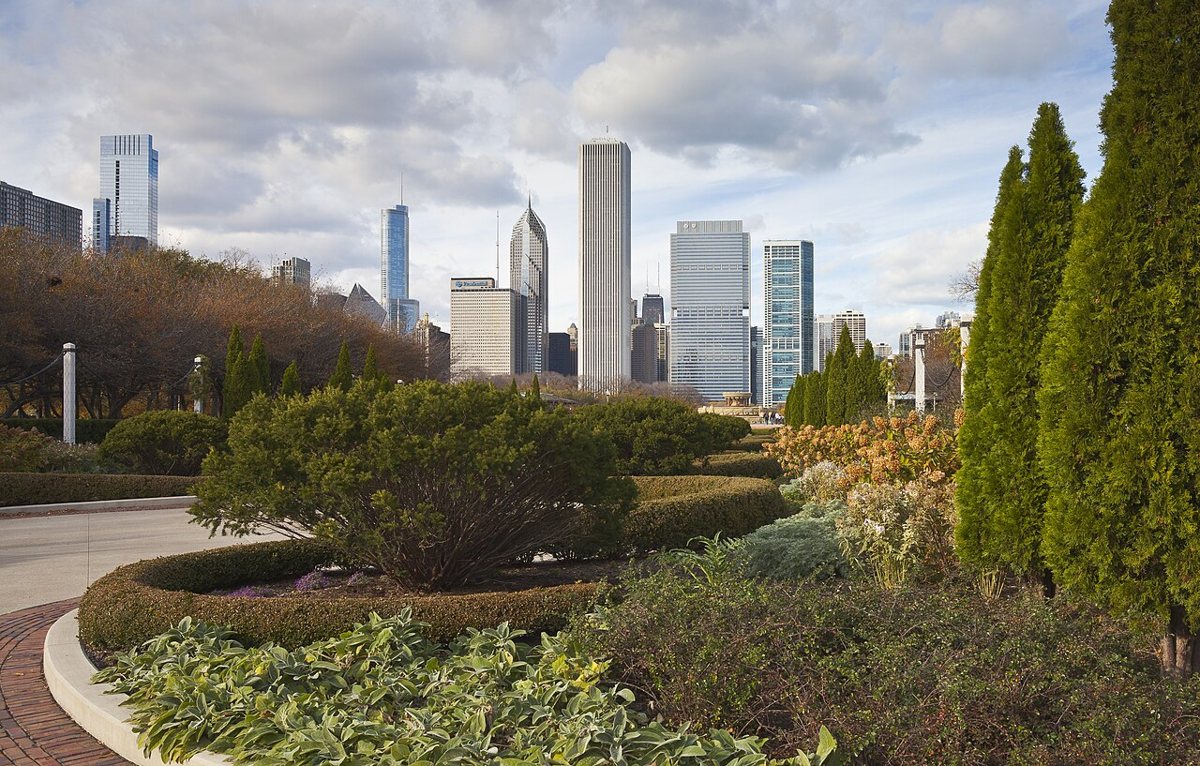
South of Millennium Park, Grant Park is the bigger, older, less manicured sibling. It is the "front yard" of the city, formally speaking, though it functions more like the city's festival grounds. Buckingham Fountain anchors the north end and puts on a water-and-light show after dark in warmer months. Lollapalooza takes over a chunk of it every summer, and the rest of the year it's runners on the paths, softball leagues on the diamonds near Roosevelt, and a lot of green space that somehow still feels underused given how much sits within a ten-minute walk of the Art Institute. The insider move is entering from the east side near the Field Museum campus, where the crowds thin and the lake view opens up.

Northerly Island doesn't get talked about the way its neighbors do, and that's part of its appeal. Once literally an island, then an airport. Meigs Field was bulldozed under cover of night in 2003, a story every longtime resident can still recount with some heat. It's now a restored natural area with walking trails, a small lagoon, and prairie grasses that sway in a wind coming straight off the water. An outdoor concert pavilion takes up part of the site, but the quieter trails around it are where you actually feel like you've left the city. It's a short walk south of the Adler Planetarium, easily combined with a museum campus day.
The Best Parks in Chicago on the North Side
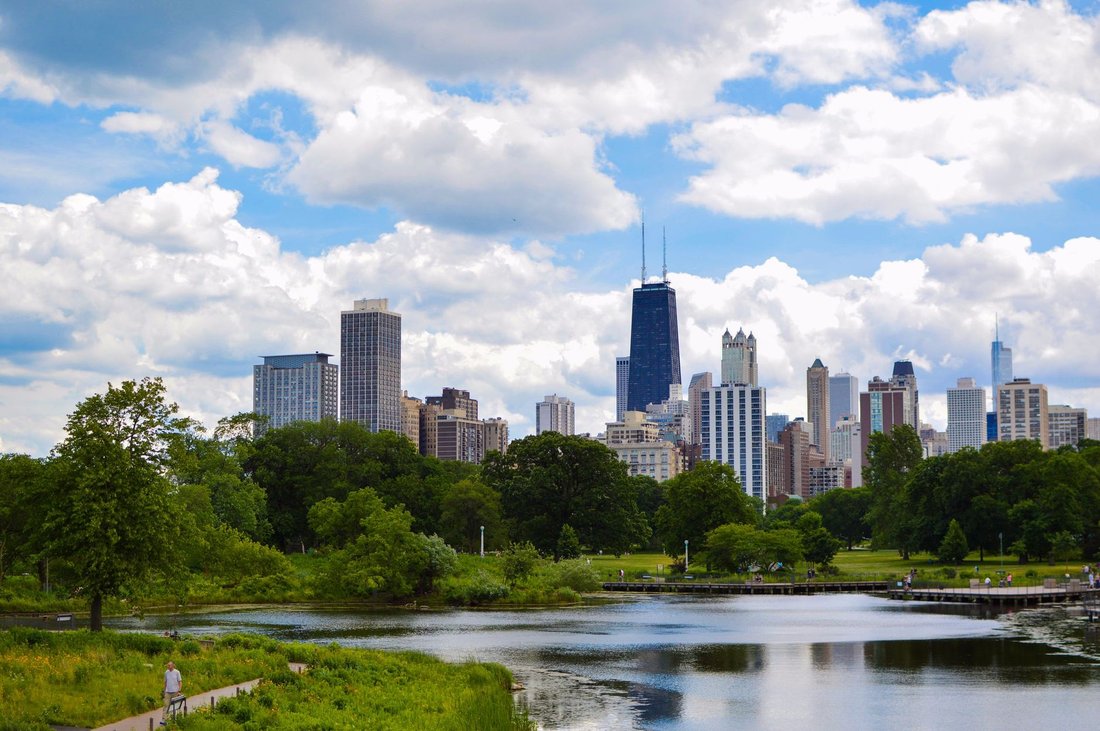
Lincoln Park is the one most visitors picture when they hear "Chicago park," and it earns that reputation honestly. It runs for miles along the lake from North Avenue up past Diversey, holding the free Lincoln Park Zoo, the Lincoln Park Conservatory, a handful of beaches, harbors full of sailboats, and a lagoon system where people fish for bass most of the summer. The North Pond area near Fullerton is the spot locals point newcomers toward: a small, quiet lagoon ringed by a walking path and a restaurant with a view, tucked away from the main crowds without any effort to find it. Bike the full length on a weekday and you'll pass more dog walkers than tourists.

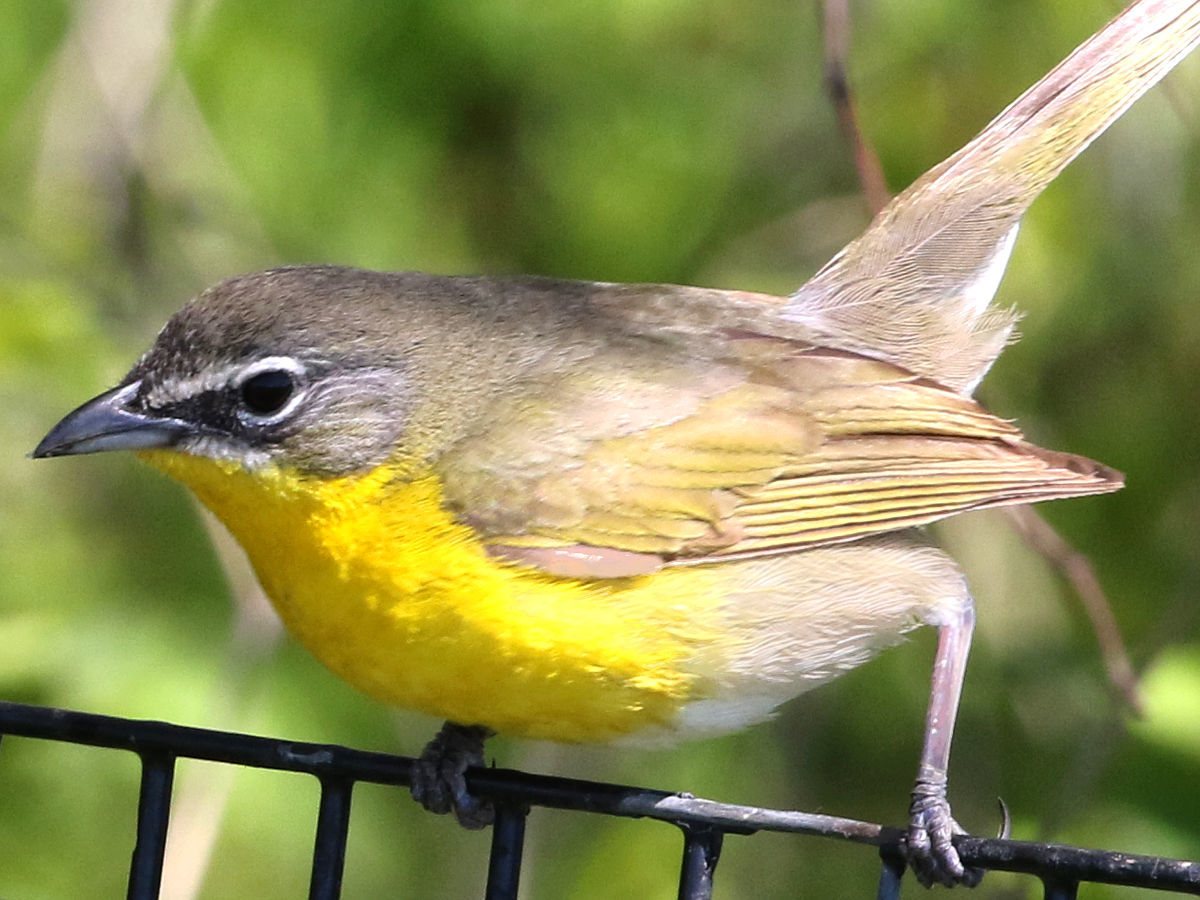
Montrose Point and Montrose Beach, up in Uptown, run on a completely different frequency than Lincoln Park. Birders show up before sunrise because Montrose Point juts into the lake at a spot that funnels migrating birds right through it, and it's one of the best urban birding locations in the country during spring and fall migration. The beach itself has a dune-restoration area roped off to protect native plants, a rarity along this shoreline, and the sand here draws a mellower, more neighborhood crowd than the beaches closer to downtown. Bring binoculars if you've got them. Even without them, the view back toward the skyline from the point at sunset is one of the better ones on the North Side.

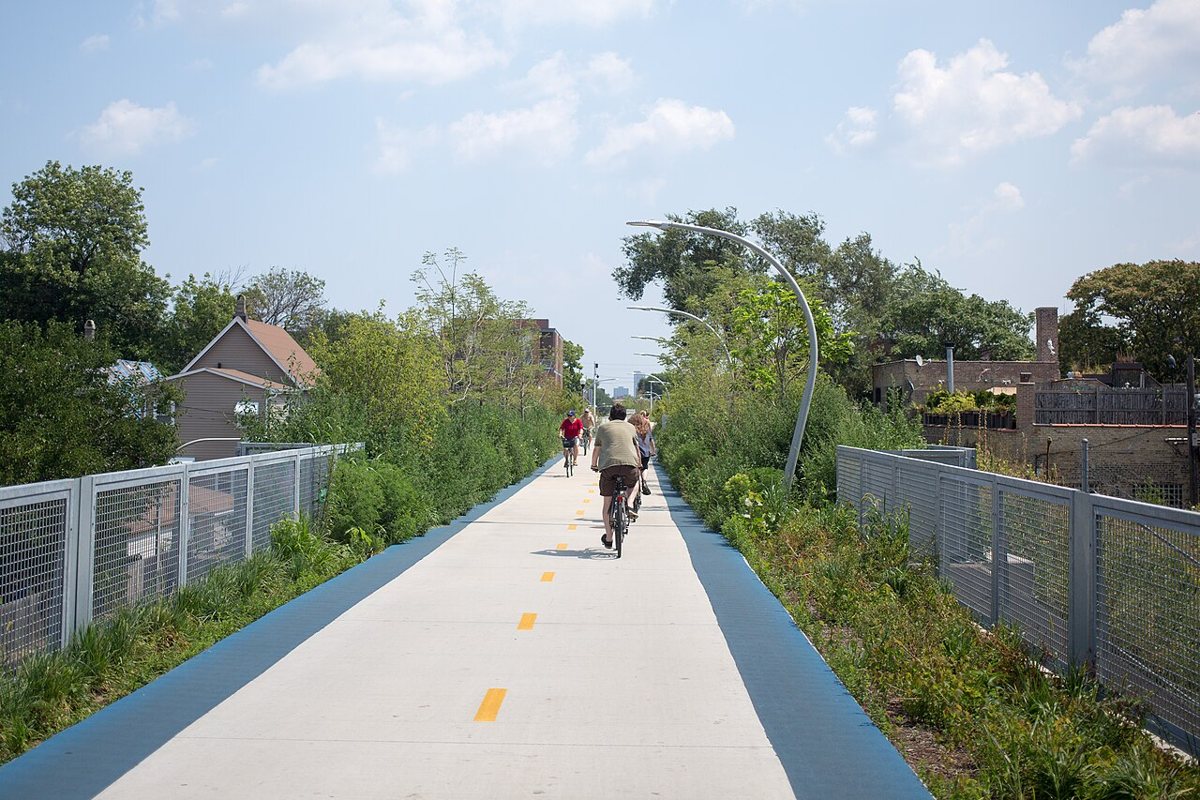
The 606, also known as the Bloomingdale Trail, took a disused freight rail viaduct running through Bucktown, Wicker Park, Humboldt Park, and Logan Square and turned it into a 2.7-mile linear park raised above the streets. Runners, cyclists, and strollers use it constantly, and because it sits a full story above the street, you get backyard views and skyline glimpses you'd never catch from the sidewalk. Access points drop down every few blocks, so it works well as a connector between neighborhoods rather than a destination on its own. Locals debate whether it has accelerated gentrification along its route. It has, visibly, and that's worth knowing before you treat it as an uncomplicated success story. Ride it end to end on a bike on a weekday evening for the best light.

Oz Park, a few blocks inland from its enormous lakefront neighbor, is small and specific: a neighborhood green space themed around the Wizard of Oz, with statues of Dorothy, the Tin Man, the Scarecrow, and the Cowardly Lion scattered through it. Kids love it, dog owners use the dog run constantly, and it's the kind of park that has zero pretension about being a destination. It's a good stop if you're already walking through the neighborhood and want fifteen minutes of green space that isn't trying to be Millennium Park.
Best Parks in Chicago on the West Side
Humboldt Park is the cultural and recreational heart of the Puerto Rican community in Chicago, marked by the steel Puerto Rican flags arching over Division Street at either end of Paseo Boricua nearby. Inside the park, a lagoon supports paddle boats and fishing, a formal garden holds one of the city's prettier rose displays in summer, and the prairie-style landscape Jens Jensen laid out here, along with the grand boathouse pavilion above the lagoon, is worth a look on its own. The National Museum of Puerto Rican Arts & Culture sits at the edge of the park. Come for a Sunday afternoon when families have claimed the picnic groves and music is drifting from near the lagoon.
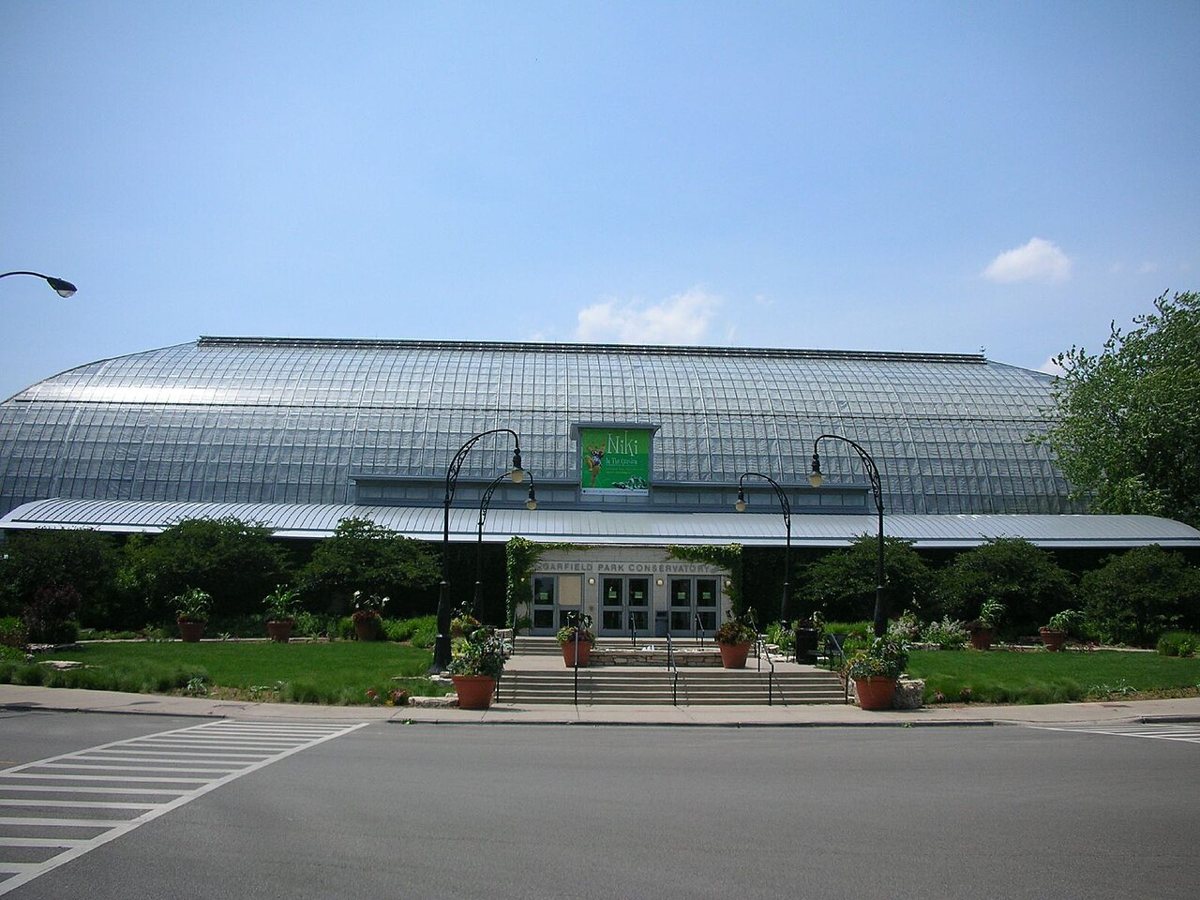
Garfield Park Conservatory is one of the largest conservatories in the country and, unlike a lot of botanical gardens, it doesn't charge admission to walk through the Fern Room, the Palm House, or the seasonal flower shows. The building itself, all curved glass and steel from the early 1900s, was designed to look like a great glass haystack, and it succeeds. Outside, Garfield Park proper has a lagoon, a golf course, and open lawns that see far less foot traffic than their North Side equivalents despite being just as sizable. A weekday morning in the conservatory, when school groups haven't arrived yet, is close to silent except for water features and rustling palm fronds.

Douglass Park, straddling North Lawndale and Little Village, doesn't show up on many out-of-town lists, which is exactly why it belongs on this one. It's a working neighborhood park, with a fieldhouse full of sports leagues, an aquatic center, open ball fields, and a community that actually uses every inch of it on a warm weekend. It also hosts large music festivals in summer that draw crowds from across the city. Locals on the West and Southwest sides will tell you it's underrated compared to the lakefront parks that get all the postcard attention, and they're not wrong. It just doesn't have a lake view to sell itself with.
Best Parks in Chicago on the South Side
Jackson Park, in Hyde Park, carries more history than almost any green space in the city. Frederick Law Olmsted designed it for the 1893 World's Columbian Exposition, and traces of that fair still linger. The Museum of Science and Industry occupies the old Palace of Fine Arts, and the Japanese-style Garden of the Phoenix sits on a small wooded island in the park's lagoon, quiet and easy to miss if you don't know to look for the footbridge. Golfers use the course along the eastern edge, and the park connects directly to the Midway Plaisance, the long green corridor running toward the University of Chicago campus. Walk the lagoon path in the late afternoon when the light comes in low over the water.
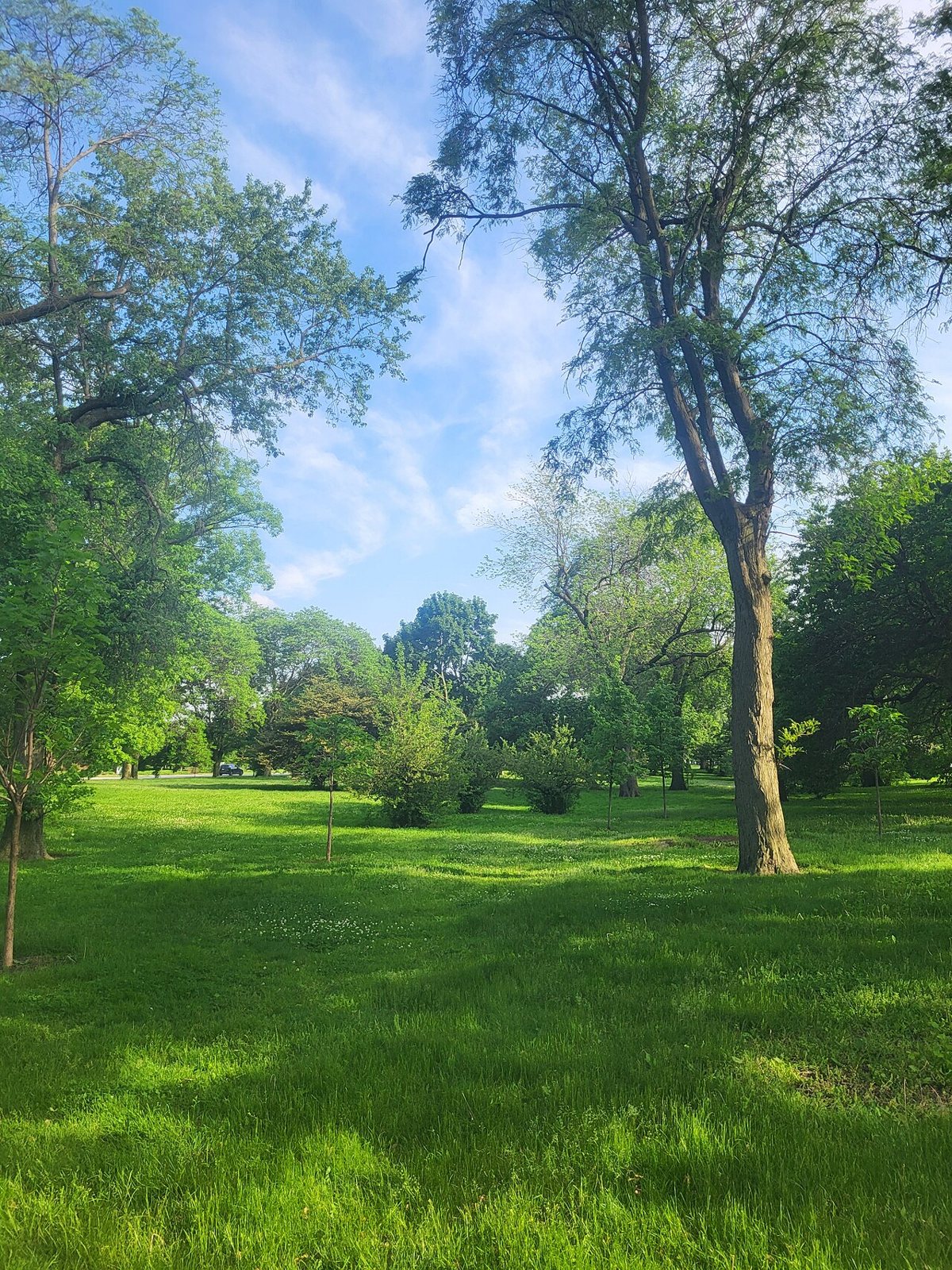

Washington Park sits just west of Jackson Park, connected by that same Midway Plaisance, and it's another Olmsted design with its own distinct feel: more open lawn, less manicured garden, home to the DuSable Black History Museum and Education Center and a large open meadow that hosts community gatherings and sports throughout the year. It's also where a lot of Hyde Park and Woodlawn residents actually spend their Sundays, away from the museum crowds a mile east. Lorado Taft's "Fountain of Time," the long concrete relief of a hundred figures marching past Father Time, stands at the western end of the Midway right beside the park, and it is worth the walk on its own.
Promontory Point, technically part of Burnham Park but treated by everyone in Hyde Park and Kenwood as its own place, is a limestone peninsula jutting into the lake with unobstructed views north toward downtown and south toward the university towers. The stepped limestone "the Point" was built in the 1930s, and generations of South Siders have used it for cookouts, first dates, study breaks, and quiet mornings exactly like the one that opens this piece. There's no beach here, only rock and grass and water, which is precisely why regulars prefer it to the sand a mile north. Bring a blanket and something to grill; the fire pits fill up fast on holiday weekends.

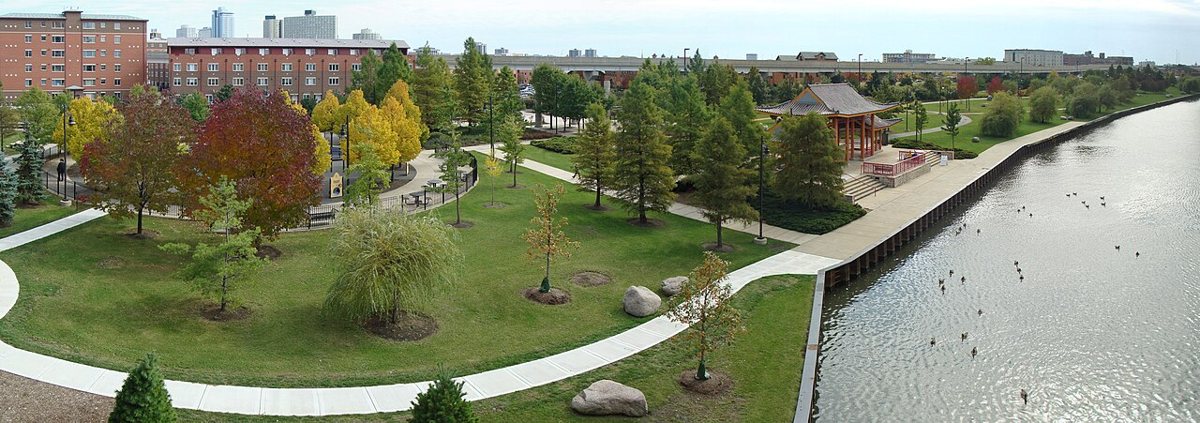
Ping Tom Memorial Park, in Chinatown along the Chicago River's South Branch, is the newest park on this list and the one that photographs best. A pagoda-style pavilion, a river walk that connects to the broader Riverwalk system, and open lawns backed by the Chicago skyline in the distance make it feel like a different city than the one three blocks away on Wentworth. Dragon boat races happen on the river here, and the park's fieldhouse hosts community programming year-round. Sit along the river's edge in the evening and watch the water taxis go by while the smell of the neighborhood's restaurants drifts over from Cermak Road.

Palmisano Park, in Bridgeport, was a limestone quarry and later a landfill, and the transformation shows in its layout. A steep, terraced hill rises from what's now a stocked fishing pond, offering a rare high vantage point in a famously flat city. Rock-climbing walls built from the old quarry stone give it a feature almost no other park in Chicago has. It's smaller and quieter than the South Side heavyweights nearby, and Bridgeport residents treat it like a well-kept secret even though there's nothing hidden about it.
Big Marsh Park, way out on the Southeast Side near the old steel mill sites along Lake Calumet, is the park that surprises people who assume Chicago's park system stops at the South Side lakefront classics. It's built around restored wetland habitat, with a pump track and bike skills area that draws a dedicated mountain-biking crowd from across the region, boardwalks over the marsh itself, and views of industrial infrastructure that give it a landscape unlike anywhere else on this list. It takes real effort to get to without a car, which keeps it from ever feeling crowded.
Getting to Chicago's Best Parks and Timing Your Visit
Most of the lakefront parks (Grant, Millennium, Northerly Island, Lincoln Park's southern stretch) sit within walking distance of Loop and Near North L stops on the Red, Brown, or Green lines. Getting to Humboldt Park, Garfield Park, or Douglass Park means the Green or Pink lines plus a short walk or bus transfer; give yourself extra time and check current CTA routes before you go, since bus schedules shift. Jackson Park, Washington Park, and Promontory Point are easiest from the Metra Electric line or the Green Line to Garfield or 63rd, with a walk east toward the water for the Point. Big Marsh is the outlier on this list. It's genuinely easier by car or bike than by transit, so plan accordingly.
- Weekday mornings beat weekends almost everywhere on this list, especially at Cloud Gate and the conservatories.
- Most of these parks and their fieldhouses are free to enter; conservatories, fieldhouse programs, and some boat rentals may charge, so check current listings before you go.
- Bike share stations sit near nearly every park mentioned here, and the 606 in particular is built for two wheels.
- Bird migration at Montrose Point peaks in spring and fall; check current conditions if that's your main draw.
None of this is really about picking a winner. A South Sider will defend Promontory Point against anyone who calls Millennium Park the city's best green space, and a Wicker Park resident riding the 606 home from work has no reason to care about either argument. That's the honest shape of Chicago parks. They are divided by geography the same way the city itself is divided, unevenly resourced across decades of lopsided investment between the North Side and the South and West sides, and still full of people who love their own patch of grass more than any other city's postcard park. Spend a season moving between a handful of these, a fishing morning at the Point, a conservatory afternoon in Garfield Park, an evening walking the 606, and you'll understand the geography of this city better than any map could show you. Grab a good neighborhood coffee shop near whichever park you land in first, or hold out for a proper Chicago hot dog afterward, and you've got the real version of a day in this city.